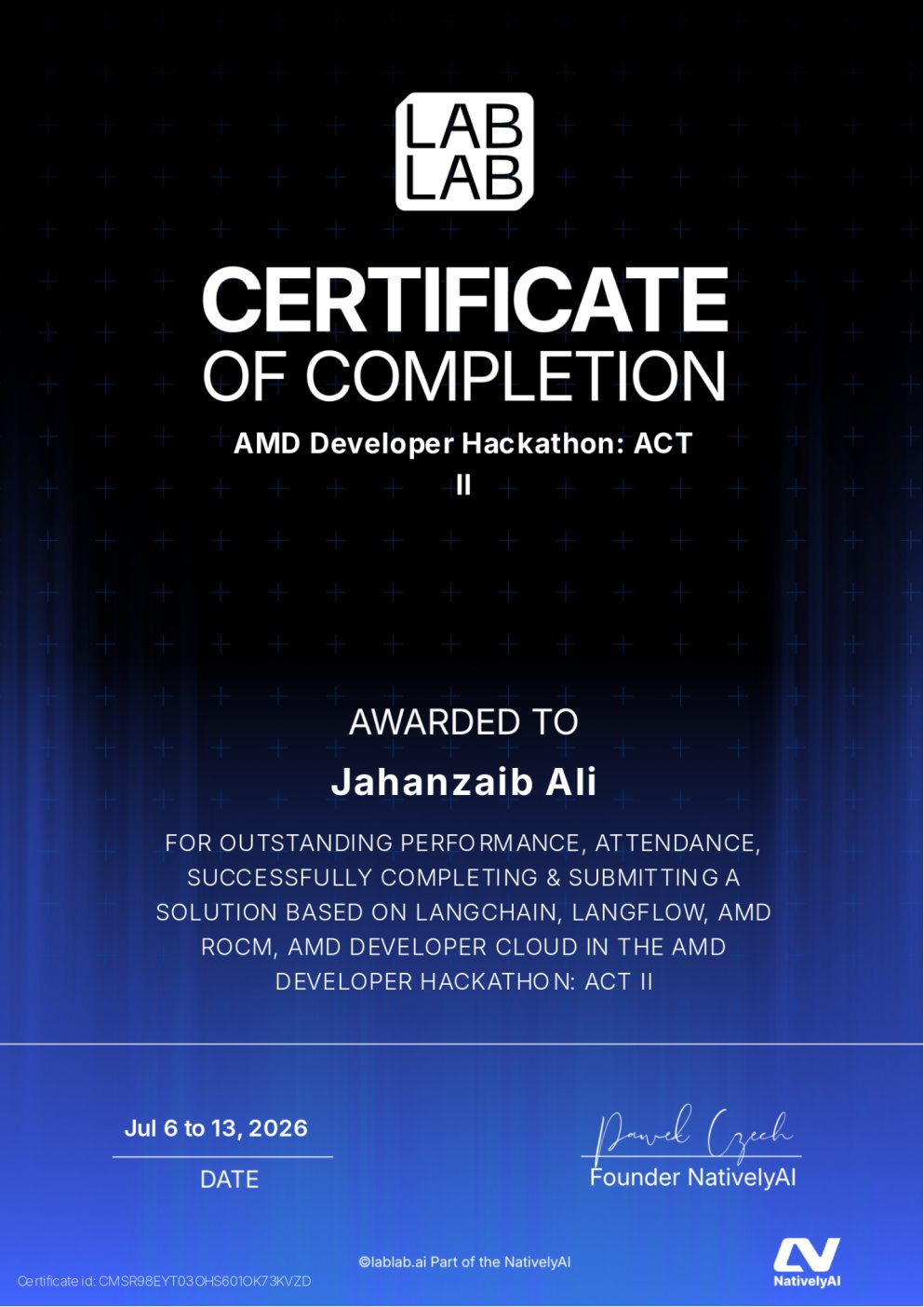
JAHANZAIB ALI
Founder & Lead Platform Engineer · AliLabsX · Apex Global Tech Solution.
I build and run the production platforms behind a global SaaS and technology company — the corporate site, AI agent platform, hosting & billing stack, fintech platform and the Kubernetes, observability and security substrate underneath. AliLabsX is the engineering arm; Apex Global Tech Solution is the company it ships under.
About
I lead engineering at AliLabsX, the team behind Apex Global Tech Solution. Across both: the public SaaS site and the private operations console, an AI agent platform with 35k+ lines of original engineering, a self-hosted hosting and licensing platform, a multi-service fintech stack, and the k3s + Terraform + Prometheus + Loki + SOPS / Cosign stack that runs it. Nine capability areas — SaaS development, AI, cloud, cybersecurity, managed IT, DevOps, digital transformation, software development, consulting — delivered as eight productized modules with test-gated, fixed-scope, fixed-fee releases. The same engineering I ship to clients is the engineering I run for our own products.
Partners & affiliations
alilabsx.com ·
the engineering arm. Hosts Nova, Forge Studio, Genesis X, Ali
Kernel, fox-hosting and the alilabsx-stream
productized reference build (eight independently purchasable
modules — architecture, k3s migration, gateway, CI/CD,
observability, security, addons, runbooks).
apexglobaltech.com · the corporate face. Global SaaS and technology company — public site, internal admin console, nine solution areas, six industries, credibility-audited claims. AliLabsX is the engineering delivery partner; the commercial commitment is Apex's.
Skills
Languages
Frameworks
Data & Infra
AI & Agents
Activity
Live stats are momentarily unavailable (GitHub API) — the link below always works.
See full activity on GitHub →NovaThe Agent's Computer
Most AI coding agents are a black-box chat window — you can't see what they're doing, or trust the result, until it's already done.
Nova gives the agent an actual computer: a live, streaming six-facet view — Files, Terminal, Editor, Browser, Activity, Review — so you watch it work in real time, with sub-agents, memory, and per-thread sandboxes handling execution.
Forge Studio
Running production AI features across multiple LLM providers means juggling separate API keys, no shared budget visibility, and no failover when a provider goes down.
A self-hosted proxy layer in front of every provider — smart routing with automatic fallback, per-provider budget tracking, a visual proxy-pool topology with live health/latency, and a Prometheus /metrics endpoint so every request is observable.
Genesis X
Buying access to bonds, real estate, or private equity as an individual investor usually means opaque intermediaries with no unified view of pricing or holdings.
Genesis X packages these instruments as digital products investors browse, buy, and manage directly — transparent pricing on top of a full transactional backend: auth, payments, and holdings.
Ali Kernel
Swapping the LLM behind an agent usually means rebuilding the tooling, memory, and safety scaffolding around it from scratch for the new backend.
A single-binary Rust gateway in front of any OpenAI-compatible backend — tool access, RAG memory, semantic routing, and a self-critique loop stay constant no matter which model sits behind it, from a local llama.cpp server to any hosted provider.
fox-hosting
WHMCS is the industry-standard hosting/billing platform, but it's locked behind an external license server and an ionCube-encoded API that's slow to integrate with a modern frontend.
Pairs WHMCS 8.10 with a custom-built license server (no external whmcs.com dependency) and a Next.js 16 client portal that talks to MySQL directly, bypassing the encoded API entirely.
Credentials